
In early November there was news for owners who fall under Romania’s so-called “luxury tax”. ANAF, the national tax administration, published Order no. 1,444/2026, which sets out the procedure to follow when a person was required to file Form 216 and did not.
The tax is not new. What is new is that ANAF now has a clear procedure for assessing it ex officio. If the owner receives a notice, they have 20 days to file the return. If they believe they were not required to file it, the notice also provides for a hearing, within 7 days.
Where does the 2.5 million lei figure come from?
This is where the most common confusion arises. For a residential building, we are not talking about the price the owner thinks the house could sell for, nor about a market value from a property listing.
What counts for this tax is the taxable value of the building communicated by the local tax authority. Individuals fall under the special tax when, on 31 December of the previous year, they own a residential building whose taxable value exceeds 2,500,000 lei.
For 2026, the tax is 0.9%, applied to the difference between the taxable value and the 2,500,000 lei threshold.
Example: if the communicated taxable value is 2,700,000 lei, the special tax applies to the 200,000 lei difference, not to the whole value of the building. At 0.9%, that is 1,800 lei.
For buildings owned by companies, the taxable value is set differently, through a periodic update based on a valuation report. That is a separate topic, explained on our page about building valuation for property tax.
Where does the floor area come in?
The taxable value of a residential building is also linked to its gross floor area and to the building characteristics set out in the Fiscal Code. This is where things get interesting for buildings that have been altered.
A house built 20 or 30 years ago may no longer look exactly as it did in the original documents. There may be an extension. An attic converted later. An added wing. An enclosed terrace. Or simply different areas in documents drawn up at different times.
We quite often find situations where the old drawings, the cadastral documentation and what we find on site do not tell exactly the same story. That does not automatically mean the tax value is wrong. It just means it is worth understanding where the difference comes from.
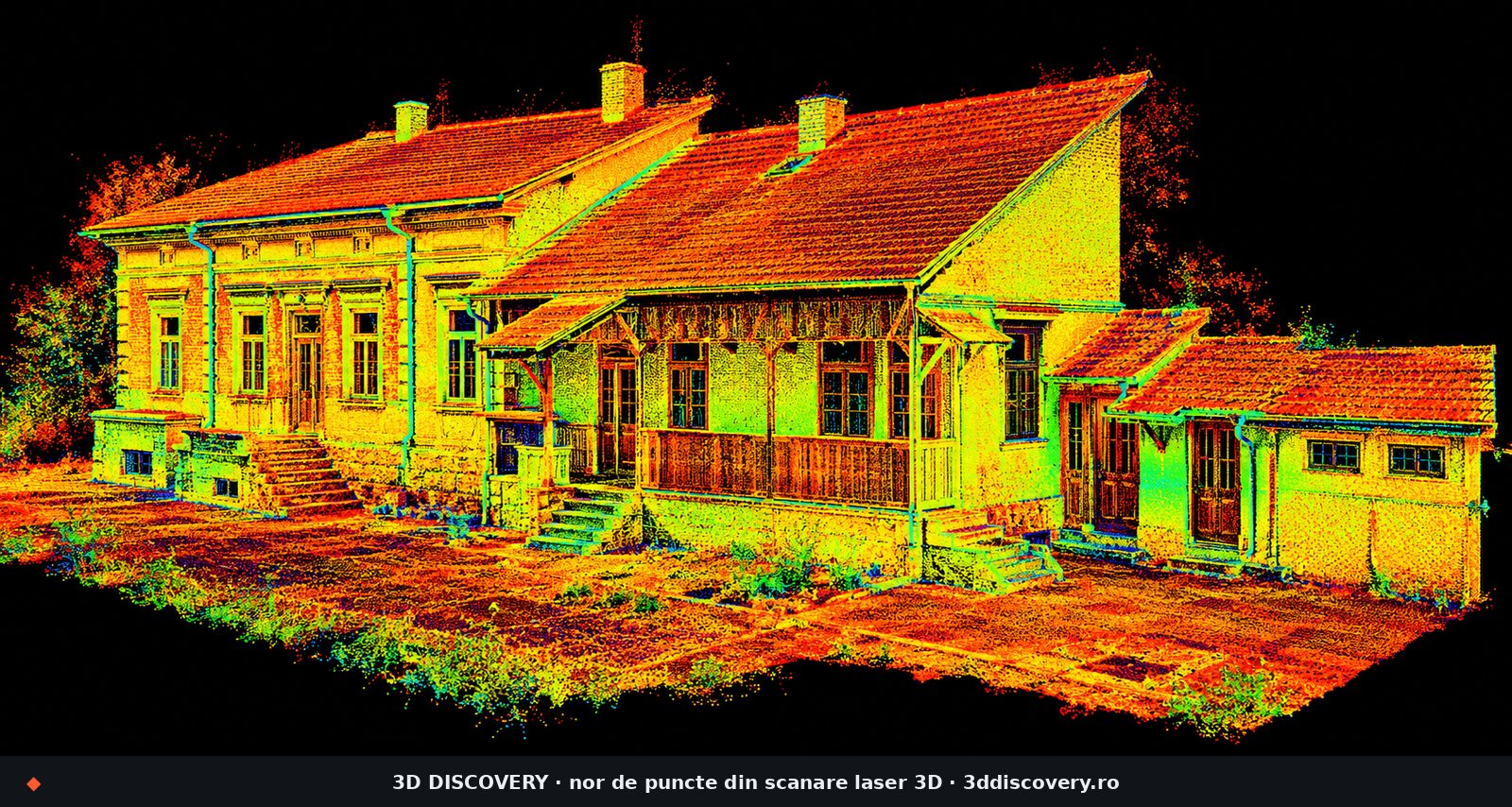
What if the documented floor area does not seem to match?
First, check the existing documents. The title deed, the cadastre, the tax record and any documents about alterations to the building should be compared.
If there are differences and it is no longer clear what actually exists, then it makes sense to measure the building. For more complex buildings we use 3D laser scanning and topographic surveying. We can record the building’s current geometry and produce floor plans, sections and areas from the same survey.
A scan does not change the cadastre or the value in the tax record, though. It answers a much simpler question: what exists on site today, and how big is it?
From there you can see whether the difference comes from the building’s geometry, from the documents, or whether further steps are needed with the right specialists.
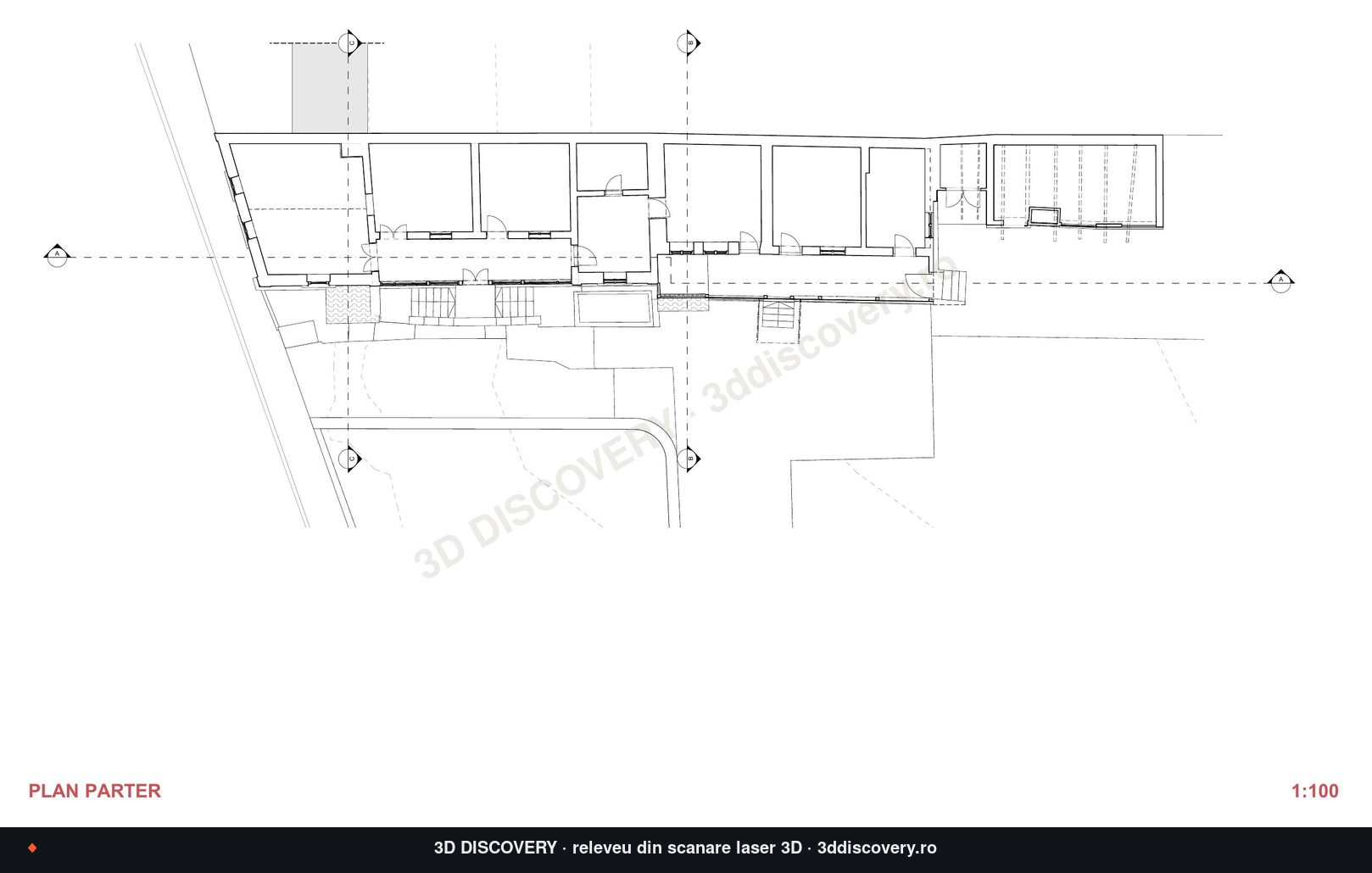
What ANAF Order no. 1,444/2026 changes
The obligation to file already existed. The order published on 2 November 2026 introduces the procedure by which ANAF can step in when Form 216 has not been filed.
In short, ANAF identifies the people who should have declared the tax, sends a notice and sets a deadline for filing. If the return is not filed, the tax liability can be assessed ex officio.
This makes checking the existing information about the property more important, especially for buildings close to the 2.5 million lei threshold.
What if the home is close to the threshold?
I do not think the answer is to start with a survey. First, look at the taxable value communicated by the local authority and at the documents that describe the building.
If the areas are clear and nothing has changed on site, things can stay very simple. But if the property has been altered over time or the documents show different areas, checking the actual situation can remove some of the unknowns.
For us, this is also the logic of a good measured survey. We do not measure a building to reach a particular tax value. We measure it to know what actually exists.
Frequently asked questions
What is the “luxury tax” on homes in Romania?
“Luxury tax” is the everyday name. In the Fiscal Code it is the special tax on high-value immovable and movable property. For residential buildings, it applies to individuals who own a building with a taxable value above 2,500,000 lei.
Is the 0.9% applied to the whole value of the house?
No. The 0.9% rate applies to the difference between the taxable value communicated by the local tax authority and the 2,500,000 lei threshold.
Is the taxable value the same as the market value?
No. This tax uses the taxable value communicated by the local tax authority.
Can a 3D scan change the taxable value?
No. A 3D scan can show the actual geometry and floor areas of the building. Any changes to cadastral or tax records are made afterwards, through the proper procedures and by the competent specialists.
What should I do if the documented floor area differs from the building?
First, find out where the difference comes from. If the documents are not enough, a measured survey of the existing building can show its exact geometry today.
Conclusion
ANAF Order no. 1,444/2026 does not introduce a new tax or a new way of valuing houses. It does introduce a clear procedure by which ANAF can assess the tax ex officio when Form 216 is not filed.
For owners of houses close to the 2,500,000 lei threshold, the useful question is fairly simple: do the value and floor area in the records correctly describe the building I own today?
If the documents disagree or the building has been altered over time, we can check the existing situation with a measured survey, 3D scanning and topographic surveying, and deliver the technical information needed for the next steps.
Talk to us about your building →
3D Discovery — One Scan. One Truth.
- Order of the President of ANAF no. 1,444/2026 on the ex officio assessment of the special tax on high-value immovable and movable property, Official Gazette of Romania, Part I, no. 918 of 2 November 2026.
- Law no. 227/2015 on the Fiscal Code, Title X¹ “Special tax on high-value immovable and movable property”, art. 500¹–500³.
- Law no. 239/2025, which set the 0.9% rate.
- Form 216 and its filing instructions, approved by ANAF Order no. 3,738/2024, as amended. ANAF guide to the special tax (in Romanian).
Information updated on 4 November 2026. This is not tax, legal or cadastral advice.